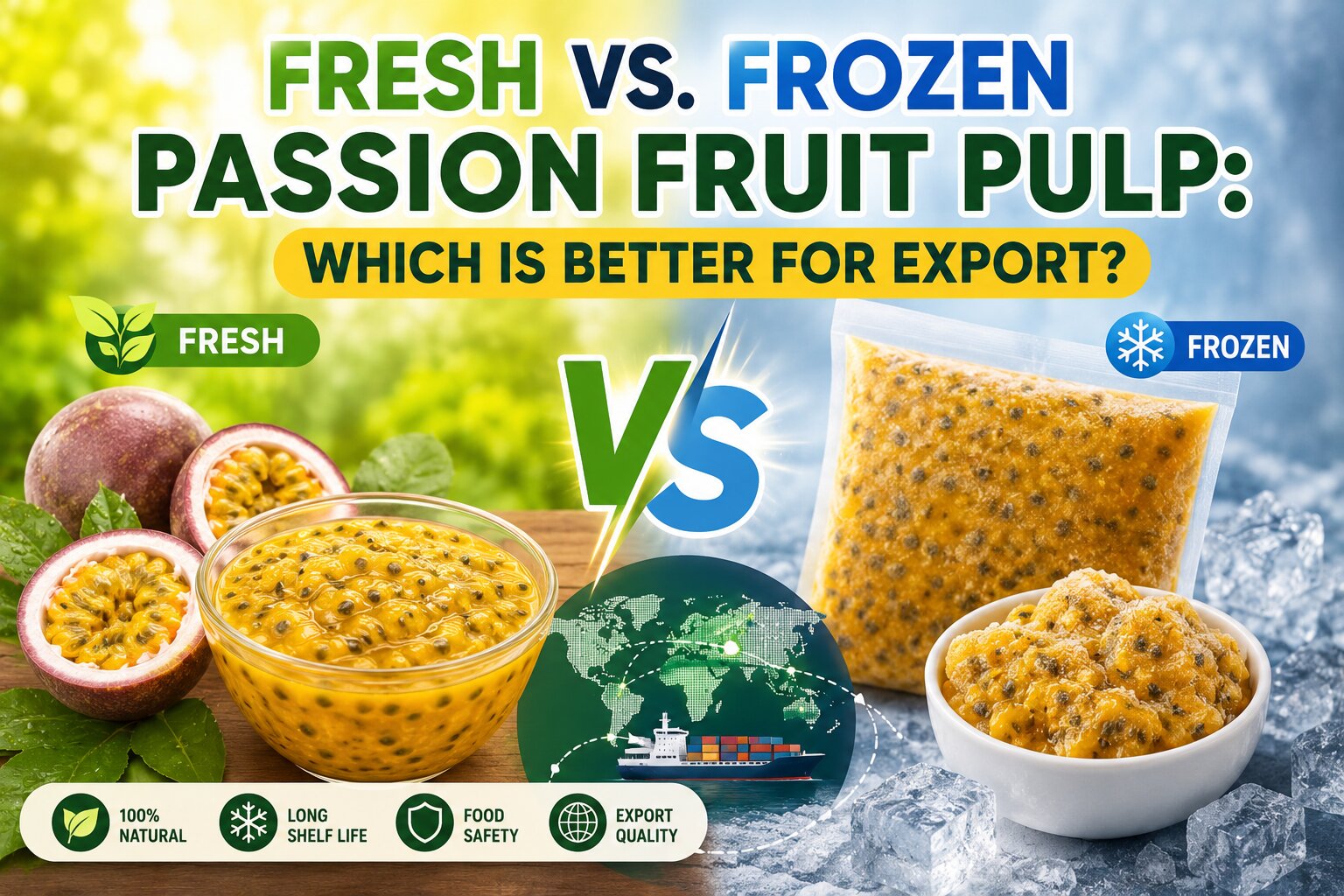
Passion fruit is one of the most popular tropical fruits in the global food and beverage industry. It is widely used in juices, smoothies, dairy products, desserts, and food processing applications. For international buyers, one common question is whether fresh passion fruit or frozen passion fruit pulp is the better option for export.
The answer depends on factors such as shelf life, transportation costs, product application, and market requirements. This article compares fresh passion fruit and frozen passion fruit pulp to help importers, distributors, and manufacturers make informed sourcing decisions.
Understanding Fresh Passion Fruit and Frozen Passion Fruit Pulp
Fresh passion fruit is shipped as whole fruit with its natural peel and pulp intact. It is commonly sold through supermarkets, wholesale markets, and fresh produce distributors.
Frozen passion fruit pulp, on the other hand, is produced by extracting the pulp from ripe fruits and preserving it through freezing technology. The product may be available with seeds or without seeds depending on customer requirements.
Both products have advantages, but their suitability depends on the intended market and application.
Shelf Life and Storage Comparison
One of the biggest differences between the two products is shelf life.
Fresh Passion Fruit
- Shelf life: Approximately 3–6 weeks depending on variety and storage conditions
- Storage temperature: 7–10°C
- Sensitive to physical damage and dehydration during transport
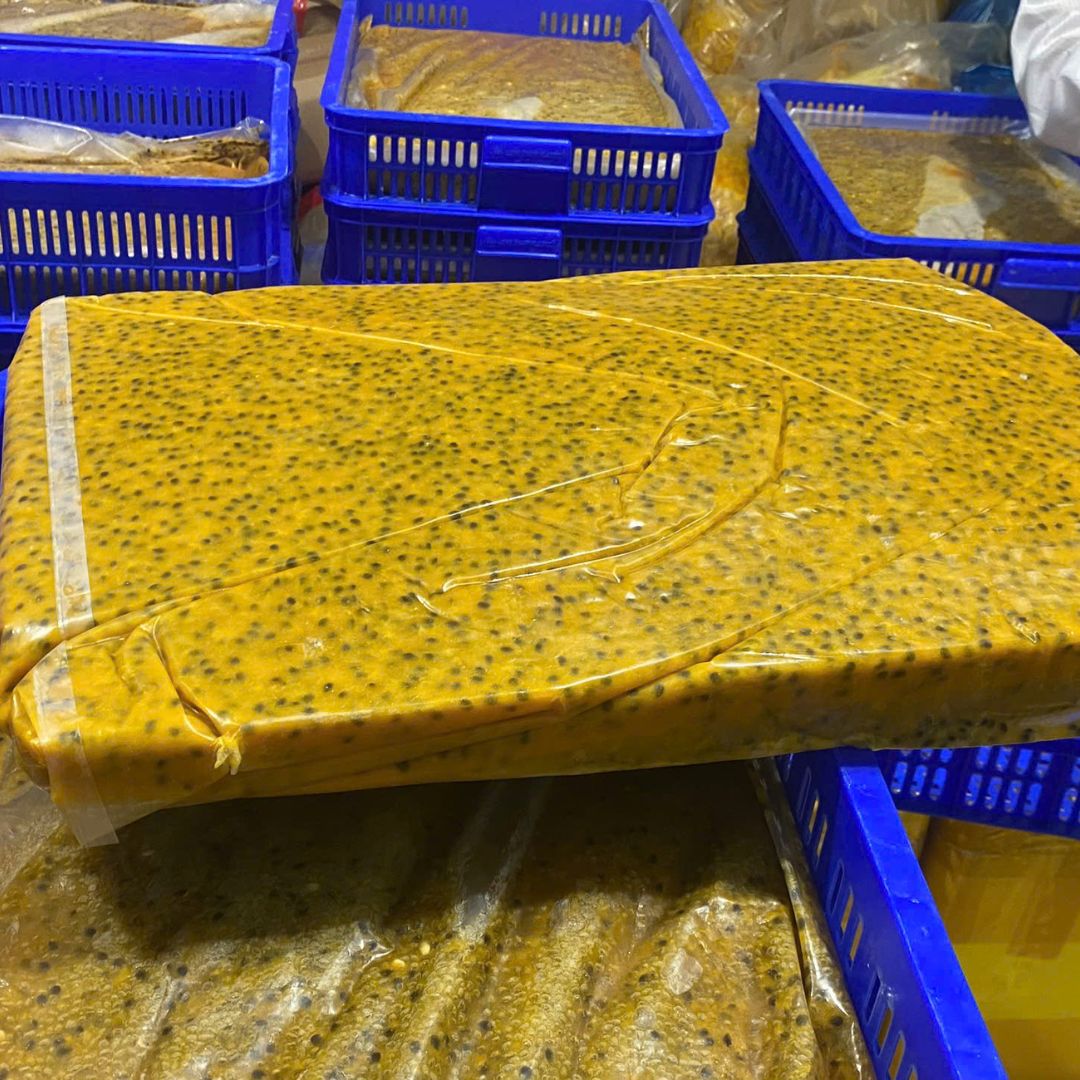
Frozen Passion Fruit Pulp
- Shelf life: Up to 24 months
- Storage temperature: -18°C or below
- Maintains quality for extended periods when the cold chain is preserved
For long-distance export markets, frozen passion fruit offers a significant advantage because it reduces spoilage risks and allows buyers to maintain inventory for longer periods.
Transportation and Logistics
Logistics play a major role in export decisions.
Fresh passion fruit requires careful handling, ventilation, and temperature control throughout the supply chain. Delays at ports or customs can affect product quality and reduce shelf life.
In contrast, frozen passion fruit is more stable during international transportation. Although it requires frozen containers, the product is less vulnerable to quality deterioration when the cold chain is properly maintained.
For markets located far from production origins, frozen pulp often provides a more reliable solution.
Product Yield and Processing Efficiency
Food manufacturers often evaluate products based on usable yield.
With fresh passion fruit, processors must handle washing, cutting, pulp extraction, and waste disposal. A portion of the fruit’s weight consists of peel, which does not contribute to final production.
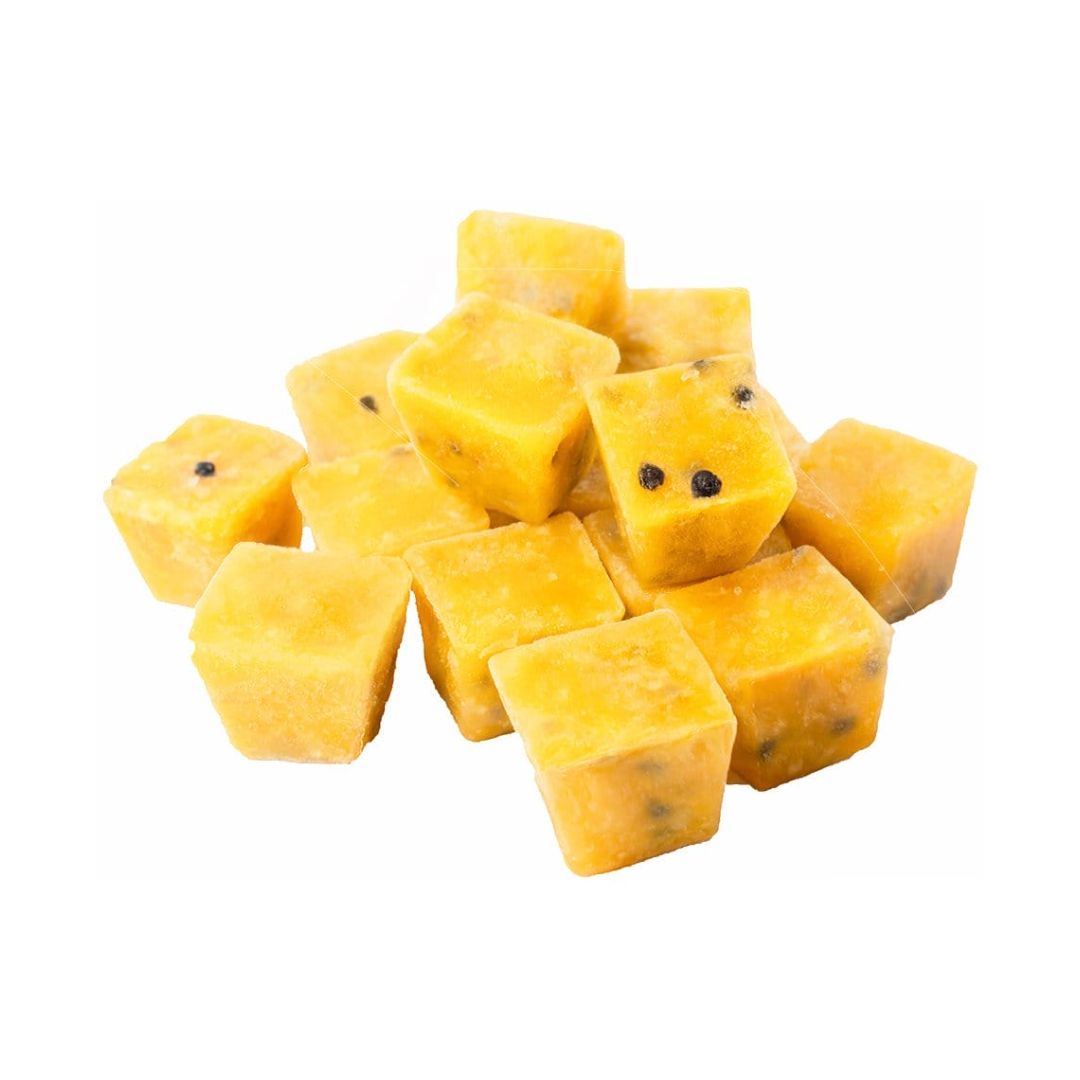
Frozen passion fruit pulp eliminates these steps because the fruit has already been processed. Manufacturers receive a ready-to-use ingredient, reducing labor costs and production time.
This efficiency makes frozen passion fruit pulp particularly attractive for:
- Juice manufacturers
- Smoothie producers
- Dairy processors
- Ice cream manufacturers
- Bakery and dessert companies
Market Applications
Fresh passion fruit is ideal for:
- Supermarkets
- Fresh produce distributors
- Premium retail stores
- Hospitality and foodservice sectors
Frozen passion fruit is ideal for:
- Beverage production
- Fruit puree manufacturing
- Frozen dessert production
- Industrial food processing
- Exporters serving year-round demand
As consumer demand for convenience and consistent quality grows, the market for frozen tropical fruit ingredients continues to expand.
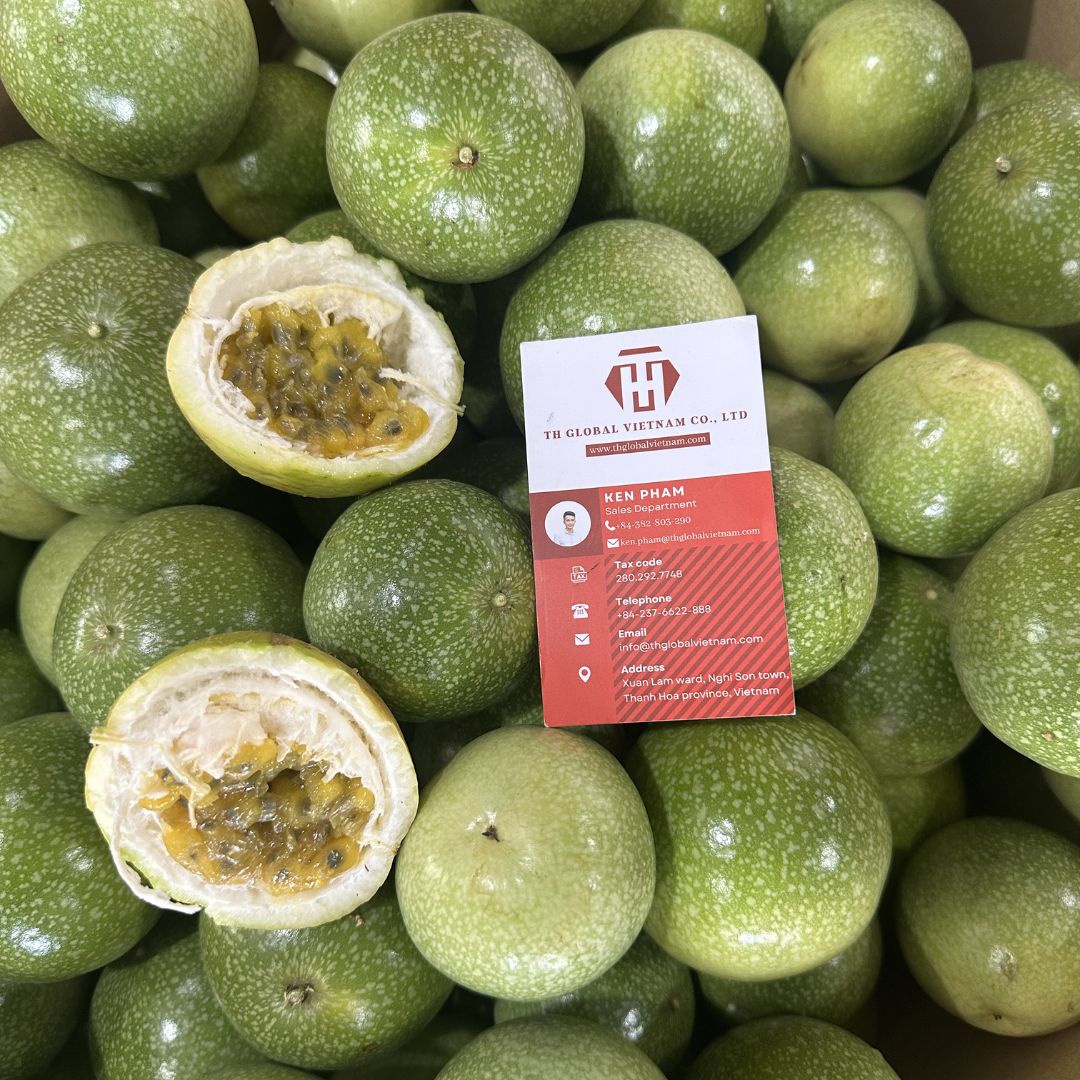
Learn more about Why Vietnamese Fresh Passion Fruit Is Preferred by Importers Worldwide
Cost Considerations
Fresh passion fruit may have lower processing costs at origin but can experience higher losses during storage and transportation.
Frozen passion fruit requires processing and freezing infrastructure; however, it reduces waste, extends shelf life, and improves production efficiency for end users.
For many industrial buyers, the long-term value of frozen pulp outweighs the additional freezing costs.
Which Option Is Better for Export?
The choice depends on the target market:
- Choose fresh passion fruit if your customers prioritize whole fruit appearance and fresh consumption.
- Choose frozen passion fruit if your customers require convenience, long shelf life, stable quality, and efficient manufacturing.
For food processors and beverage manufacturers, frozen pulp is often the preferred solution due to its consistency and ease of use.
Both fresh and frozen passion fruit have important roles in international trade. Fresh fruit serves retail and fresh produce markets, while frozen pulp supports industrial food and beverage production.
For exporters targeting long-distance markets and large-scale manufacturers, frozen passion fruitoffers clear advantages in shelf life, logistics, yield, and processing efficiency. As global demand for tropical fruit ingredients continues to grow, frozen passion fruit remains one of the most practical and versatile export products.
 FR
FR  EN
EN  ES
ES  JA
JA  KO
KO