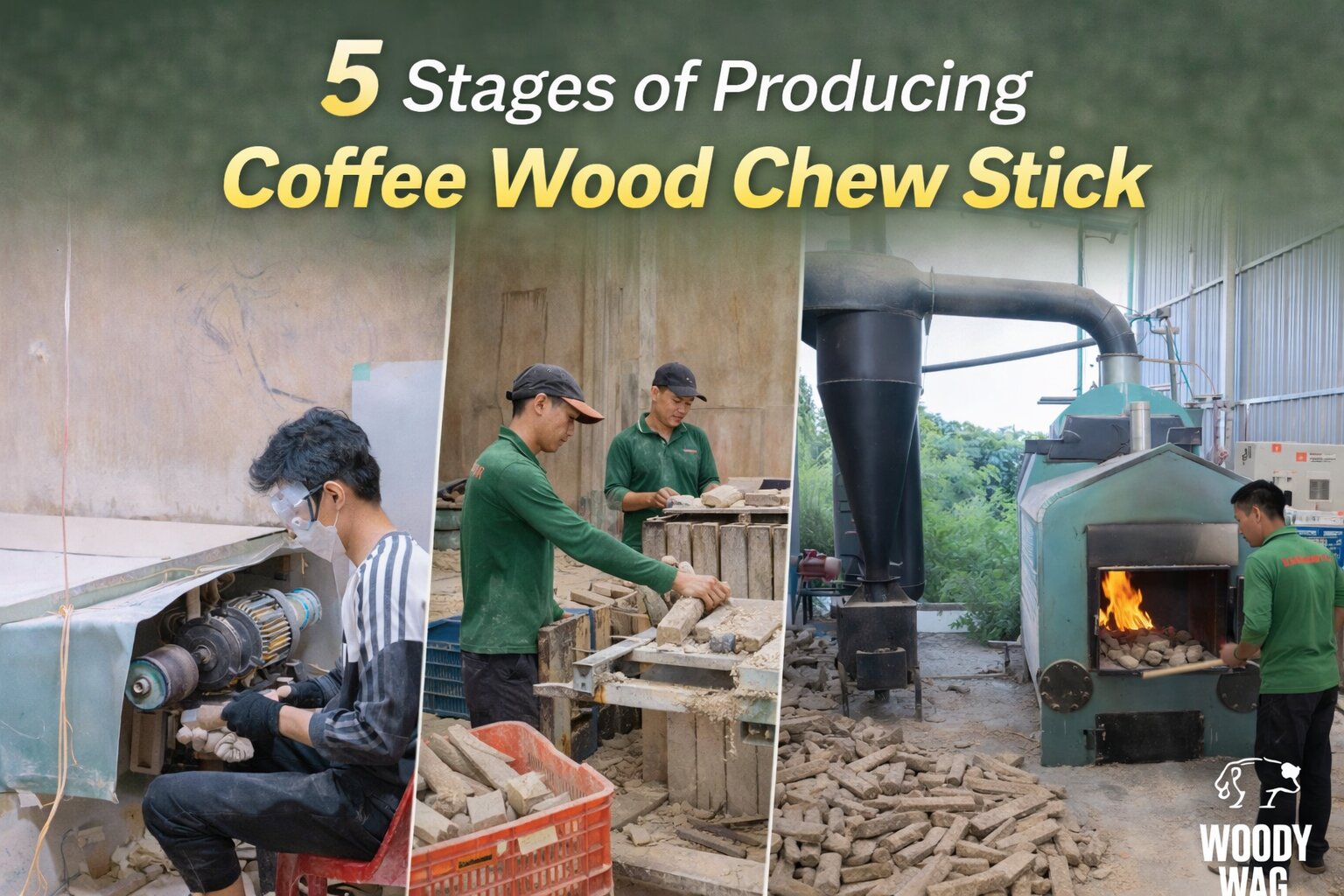
As pet owners increasingly prefer natural and eco-friendly products, the coffee wood chew stick has become one of the most popular dog chew options worldwide. Made from retired coffee trees, these chew sticks are durable, chemical-free, and sustainable.
However, producing a high-quality coffee wood chew stick requires a careful process to ensure safety, durability, and smooth finishing. Manufacturers must follow several steps to transform raw coffee branches into safe chew toys for dogs.
In this article, we explore the five key stages of producing coffee wood chew sticks, from raw wood preparation to final polishing.
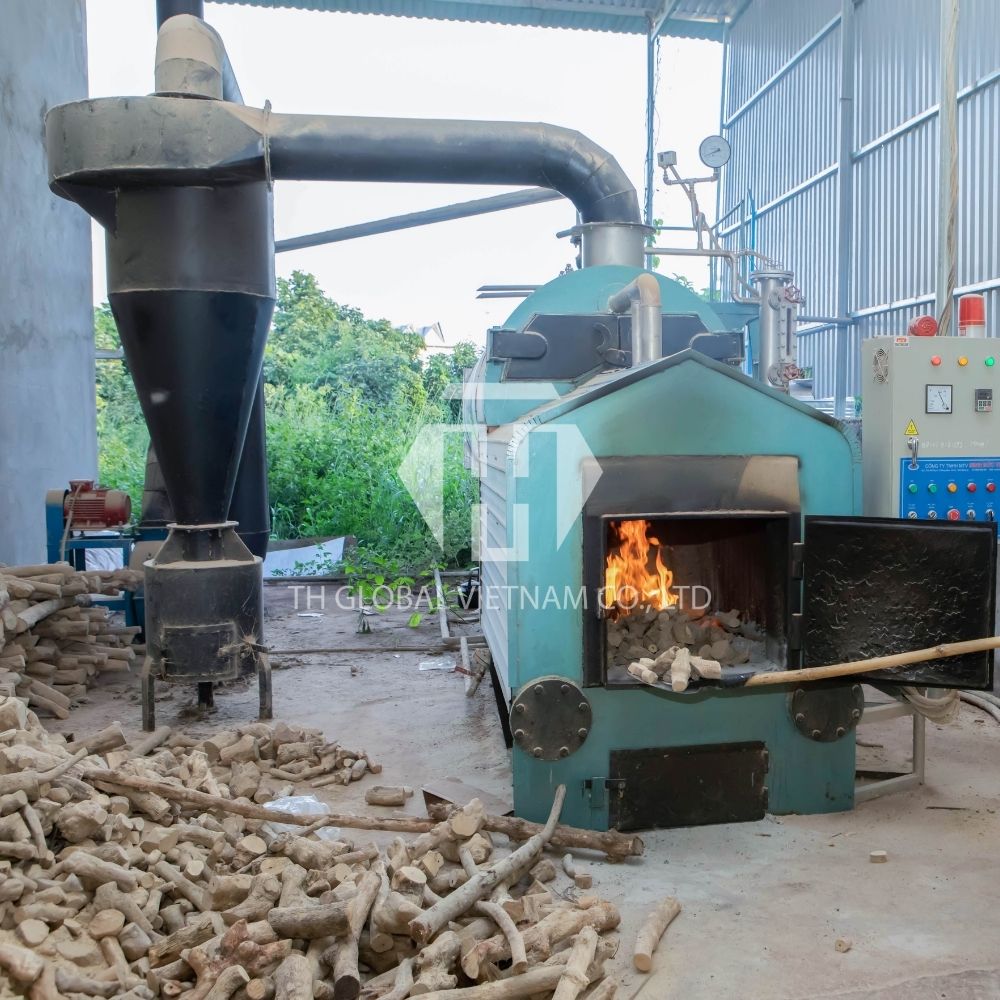
1. Drying the Coffee Wood
The first stage in producing a coffee wood chew stick is drying the raw coffee wood. Coffee trees that are removed from plantations must go through a natural or controlled drying process before further processing.
Drying is essential because fresh wood contains moisture that can lead to cracking, mold, or structural weakness. The drying stage helps stabilize the wood and improve durability.
Proper drying ensures that the chew sticks:
-
Maintain strong density
-
Resist splitting during chewing
-
Have a longer shelf life
Manufacturers such as TH 글로벌 베트남 carefully control the moisture level of coffee wood before moving to the next stage of production.
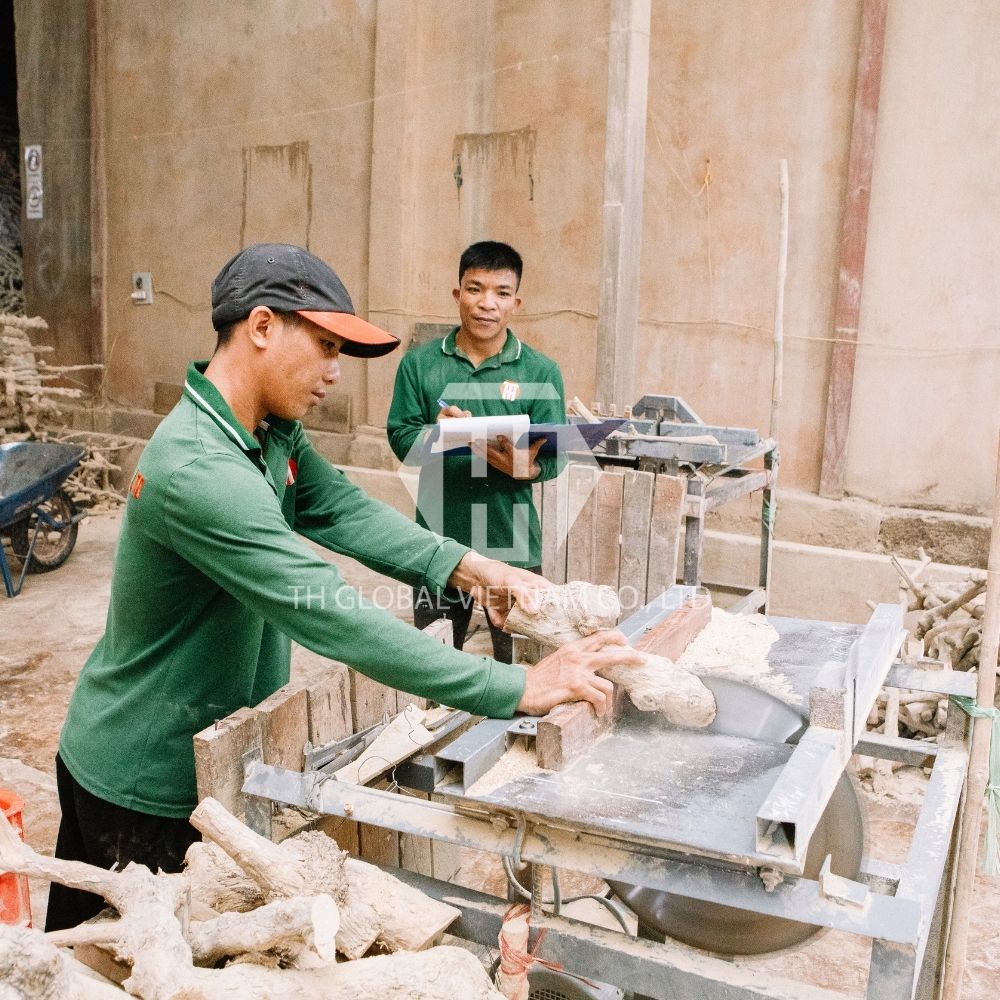
2. Cutting the Wood into Chew Stick Sizes
Once the wood is properly dried, the next stage is cutting the coffee branches into suitable sizes. This step transforms raw wood logs into basic coffee wood chew stick shapes.
The cutting process typically includes:
-
Selecting strong and healthy wood branches
-
Cutting them into standardized lengths
-
Sorting by size for small, medium, and large dogs
This stage ensures that the chew sticks meet different pet needs and safety standards.
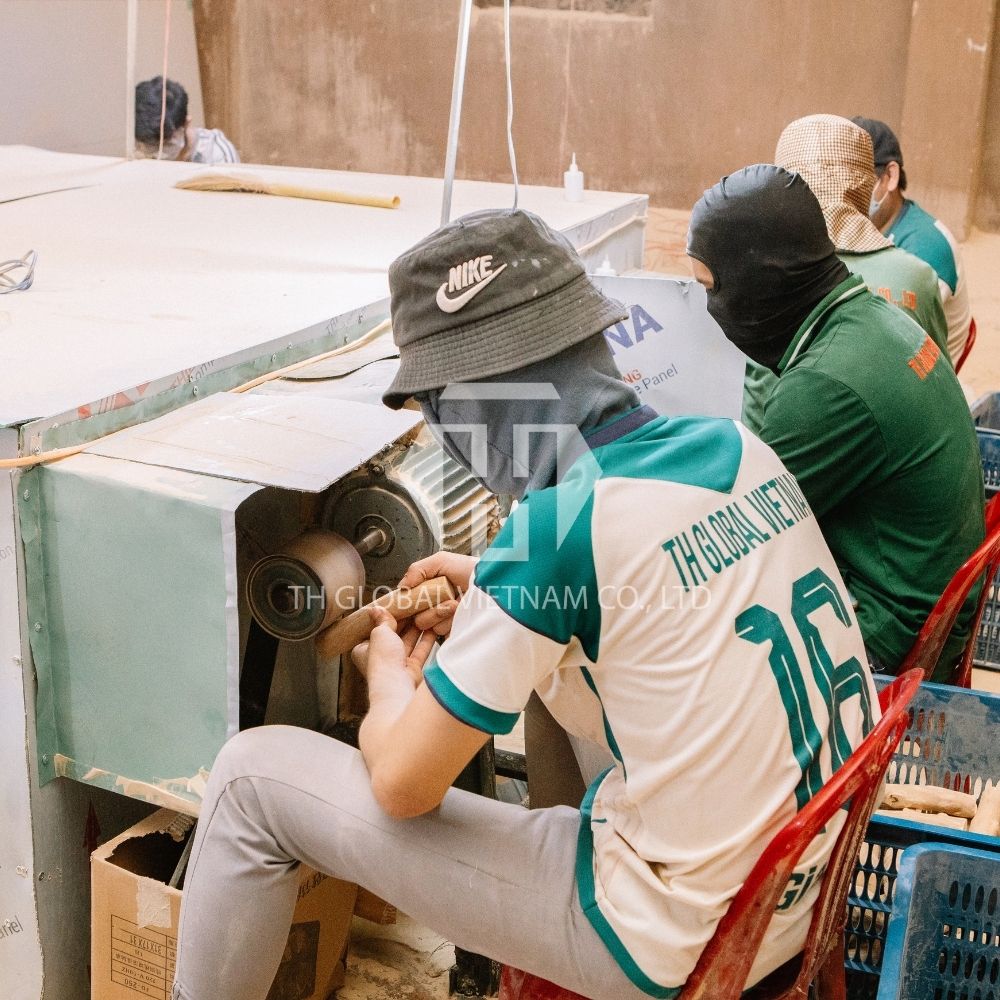
3. Scrubbing and Removing the Wood Peel
After cutting, the outer bark or peel of the wood must be removed. This stage is known as scrubbing the wood peel.
The bark layer can contain rough textures or impurities that are not ideal for dog chewing. Removing this outer layer helps expose the clean and dense coffee wood core.
During this step, workers:
-
Remove bark from the wood surface
-
Clean the wood thoroughly
-
Prepare the stick for shaping
This process improves both hygiene and product appearance while ensuring the coffee wood chew stick is safe for dogs.
4. Slimming Down and Shaping the Stick
The fourth stage focuses on shaping the chew sticks into their final form. In this step, the wood is trimmed and slimmed down to achieve the desired diameter and smooth edges.
The shaping process helps ensure that the coffee wood chew stick is:
-
Comfortable for dogs to hold and chew
-
Free from sharp edges
-
Consistent in size and structure
At this stage, manufacturers also perform additional inspections to remove defective pieces or irregular shapes.
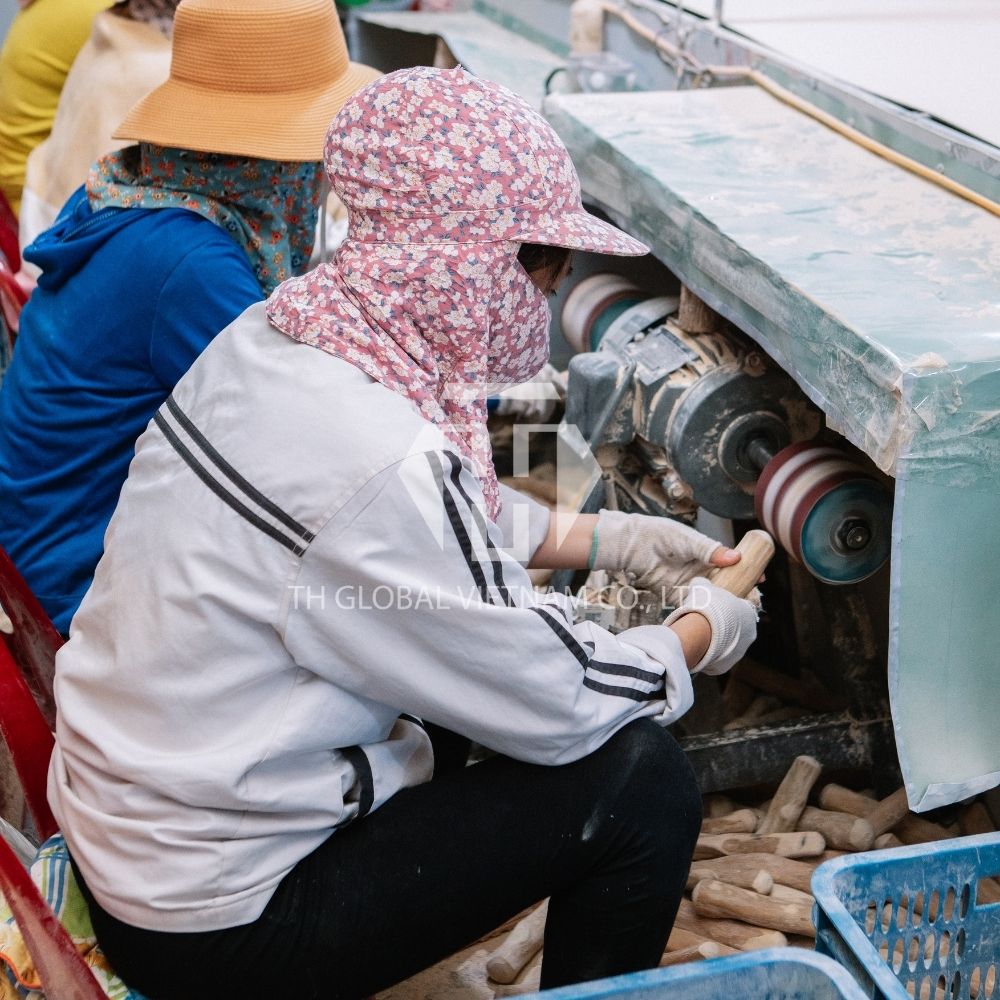
5. Polishing the Coffee Wood Chew Stick
The final stage of producing a coffee wood chew stick is polishing. This step smooths the surface of the wood and prepares it for packaging.
Polishing is important because it:
-
Removes rough surfaces
-
Improves safety during chewing
-
Enhances the natural appearance of the wood
Unlike synthetic chew toys, coffee wood chews are polished without chemical coatings or artificial treatments. The final product remains a natural dog chew made from a single ingredient—coffee wood.
Learn more about how coffee wood dog chew supports a circular economy
Why the Production Process Matters
The quality of a coffee wood chew stick depends heavily on proper manufacturing. Each stage—from drying to polishing—plays a critical role in ensuring the chew is safe, durable, and enjoyable for dogs.
When produced correctly, coffee wood chews offer several advantages:
-
Natural and chemical-free material
-
Long-lasting durability
-
Support for dog dental health
-
Sustainable use of agricultural resources
Vietnam’s coffee-growing regions provide an abundant supply of coffee wood, making the country an important manufacturing hub for natural dog chews.
Companies like TH 글로벌 베트남 combine sustainable sourcing with skilled craftsmanship to produce high-quality coffee wood chew sticks for global markets.
 KO
KO  EN
EN  FR
FR  ES
ES  JA
JA