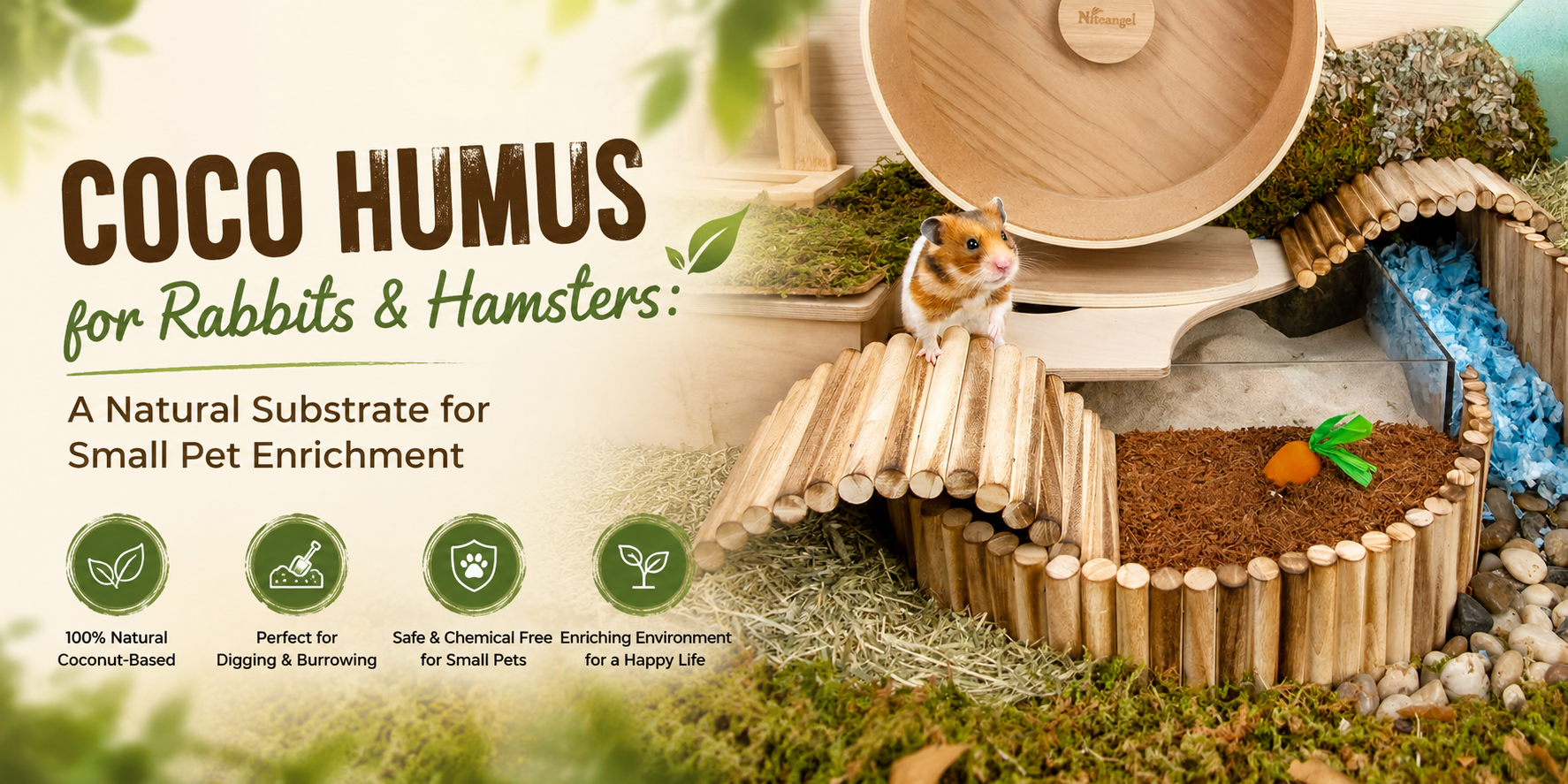
As pet owners become more careful about what goes into their pets’ living spaces, natural bedding and enrichment materials are gaining more attention. For small animals such as rabbits and hamsters, the right substrate is not only about comfort. It also supports natural behaviors such as digging, exploring, foraging, and playing. That is why coco humus for rabbits and hamsters is becoming an interesting option for pet product brands, wholesalers, and small animal accessory suppliers.
Coco humus is made from processed coconut material. It has a soft, earthy texture and a natural appearance, making it suitable for brands that want to offer eco-friendly alternatives to synthetic pet products. However, when used for small pets, quality is very important. Coco humus should be clean, dry, low-dust, free from fertilizer, free from pesticides, and processed for pet use.
What Is Coco Humus?
Coco humus is a coconut-based material often known for its moisture-holding and soft-texture properties. In the pet industry, it can be developed as a natural substrate for digging boxes, play corners, and enrichment areas. Unlike plastic toys or artificial mats, coco humus gives rabbits and hamsters a more natural surface to touch, smell, and explore.
For rabbits and hamsters, coco humus should not be positioned as food or as a complete replacement for every type of bedding. Instead, it works best as a natural enrichment substrate when used correctly. For example, it can be placed in a digging box for rabbits or in a small digging area for hamsters.
Why Rabbits and Hamsters Need Natural Substrate
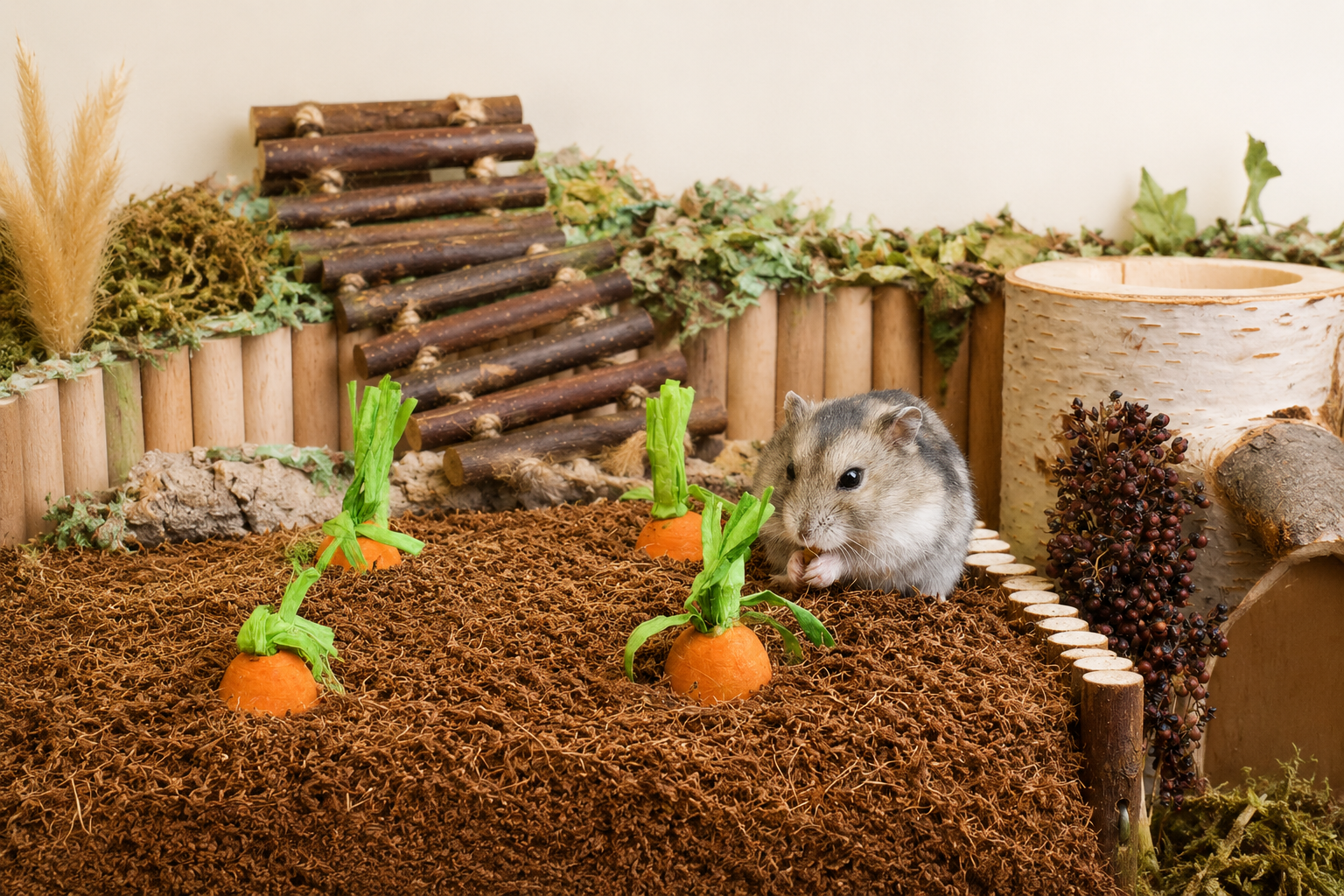
Small pets are active, curious animals. Hamsters are natural diggers and need bedding deep enough to allow digging and burrowing. The RSPCA also advises providing suitable nesting materials such as hay, wood wool, shredded paper, or cardboard for hamsters.
Rabbits also need safe, clean, and comfortable bedding. The RSPCA notes that rabbit bedding should be warm and safe to eat, such as dust-free straw or hay, with safe absorbent materials underneath. This is why coco humus should be introduced thoughtfully, mainly as a natural digging and enrichment material rather than the only bedding layer.
Benefits of Coco Humus for Rabbits and Hamsters
The first benefit of coco humus for rabbits and hamsters is its natural texture. Small animals enjoy exploring different surfaces, and coco humus provides a soft, earthy feel that can make their environment more interesting.
Second, coco humus supports enrichment. Rabbits can use it in a supervised digging box, while hamsters can enjoy it in a small digging corner. This helps create a more engaging habitat and encourages natural movement.
Third, coco humus is an eco-friendly product. Since it is made from coconut material, it fits well with the growing demand for sustainable pet supplies. For importers and distributors, this makes coco humus a good addition to a natural pet product collection.
Finally, it has strong B2B potential. Pet shops, online pet brands, and wholesalers can position coco humus as a natural small pet substrate for enrichment, especially when sold with clear usage instructions.
How to Use Coco Humus Safely
To use coco humus for small pets, always choose a clean and pet-grade product. It should not contain fertilizer, chemical treatment, artificial fragrance, or sharp particles. The texture should be soft and low-dust to reduce irritation.
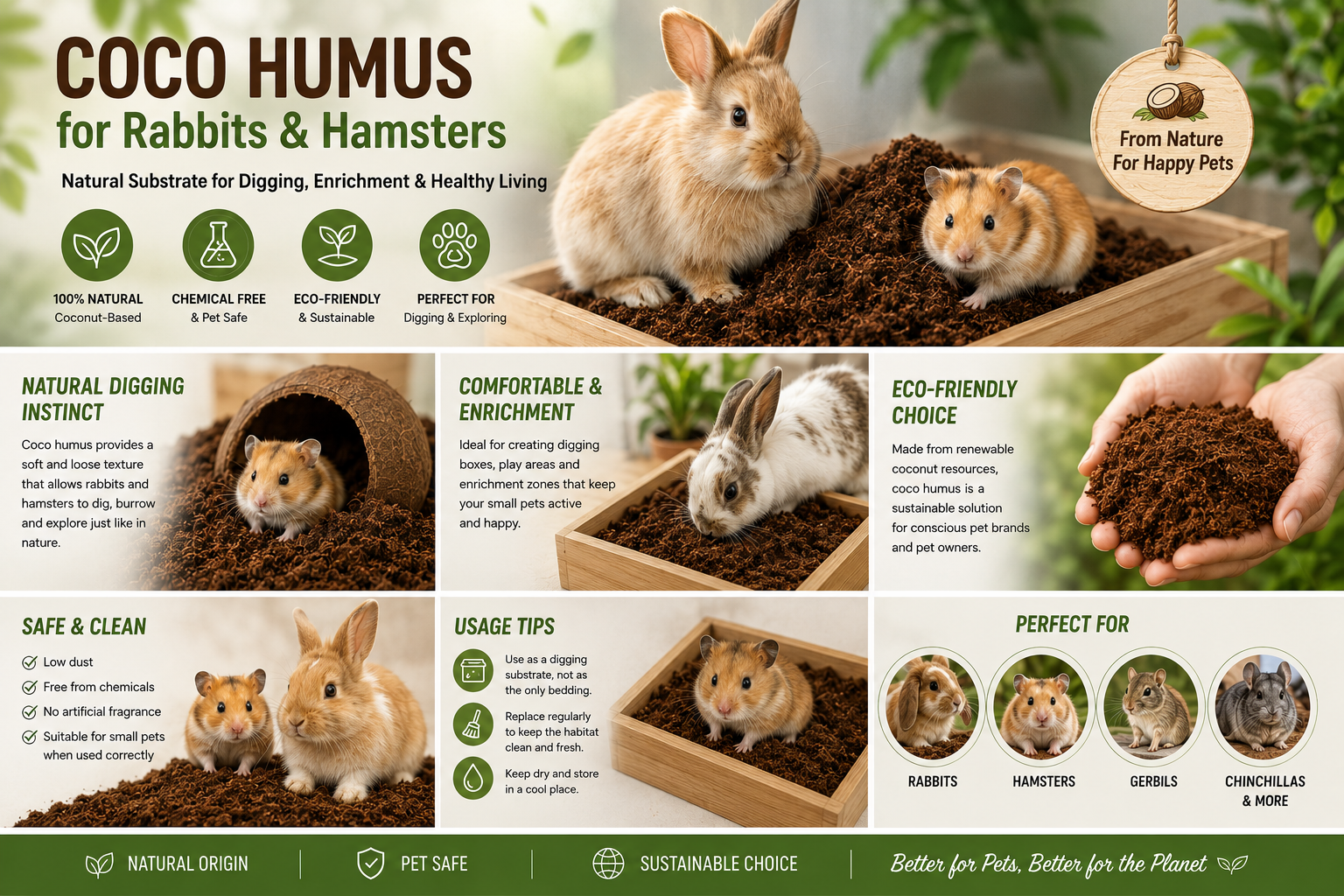
For rabbits, coco humus can be placed in a digging box or play tray. It should not replace hay, straw, or other rabbit-safe bedding materials. The area should be cleaned regularly, and the rabbit should be able to move away from the substrate if it does not like it. The Rabbit Welfare Association and Fund also reminds owners that rabbit accommodation needs good airflow and regular cleaning.
For hamsters, coco humus can be used as a small enrichment section instead of the full cage base. Hamsters still need deep bedding for burrowing, and the main bedding should support tunnel-making and nesting behavior. Coco humus can be added as a texture zone where the hamster can dig, sniff, and explore.
If a rabbit or hamster eats a large amount of coco humus, remove the substrate and monitor the pet. Pet owners should contact a veterinarian if they notice unusual behavior, digestive issues, or respiratory irritation.
Why Importers Should Consider Coco Humus
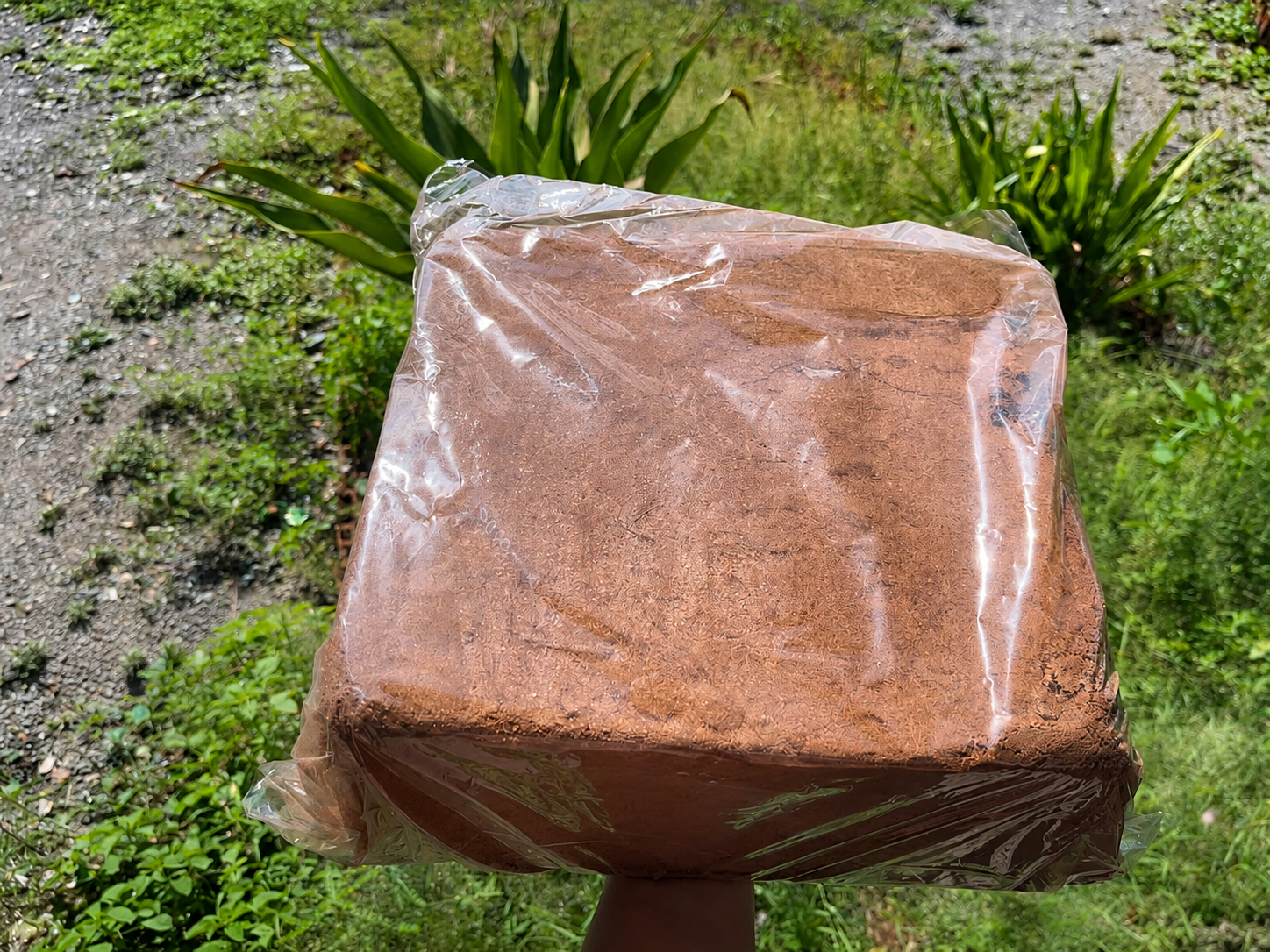
The market for natural pet products is expanding because consumers are looking for safer, simpler, and more sustainable choices. Coco humus for rabbits and hamsters can be packaged in retail bags, compressed blocks, or private label formats. This makes it suitable for pet stores, garden-pet crossover retailers, e-commerce brands, and small animal product distributors.
For B2B buyers, the key selling points are natural origin, eco-friendly positioning, soft texture, and flexible packaging. With the right quality control, coco humus can become a valuable add-on product for rabbit, hamster, reptile, and small pet categories.
Conclusion
Coco humus is not just a gardening material. When properly processed for pet use, it can become a natural substrate for rabbits and hamsters, especially for digging and enrichment. It offers a soft texture, eco-friendly story, and strong retail potential.
For brands and importers looking to expand their natural small pet product line, coco humus for rabbits and hamsters is a practical and attractive option. The most important point is to choose clean, dry, low-dust, chemical-free coco humus and provide clear instructions for safe use.
 Contact TH Global Vietnam today to explore wholesale options.
 TH GLOBAL VIETNAM CO., LTD
 Hotline: +84 382 803 290
 Email: [email protected]
 EN
EN  FR
FR  ES
ES  JA
JA  KO
KO