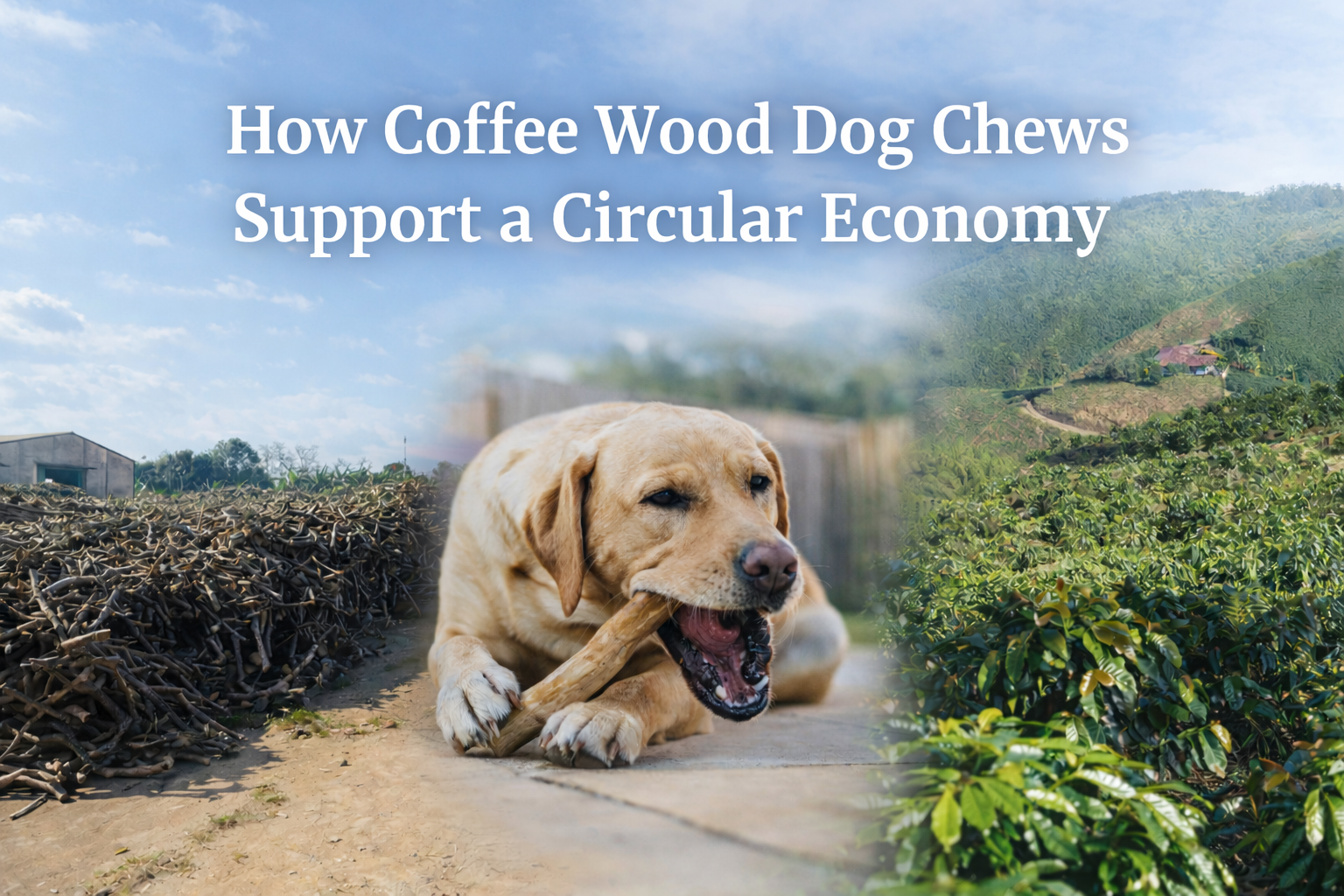
Sustainability That Starts at the Farm
Sustainability in the pet industry should be based on real practices, not just marketing messages. Coffee wood dog chews are a clear example of how responsible sourcing and thoughtful product design can support a circular economy in a simple, practical way.
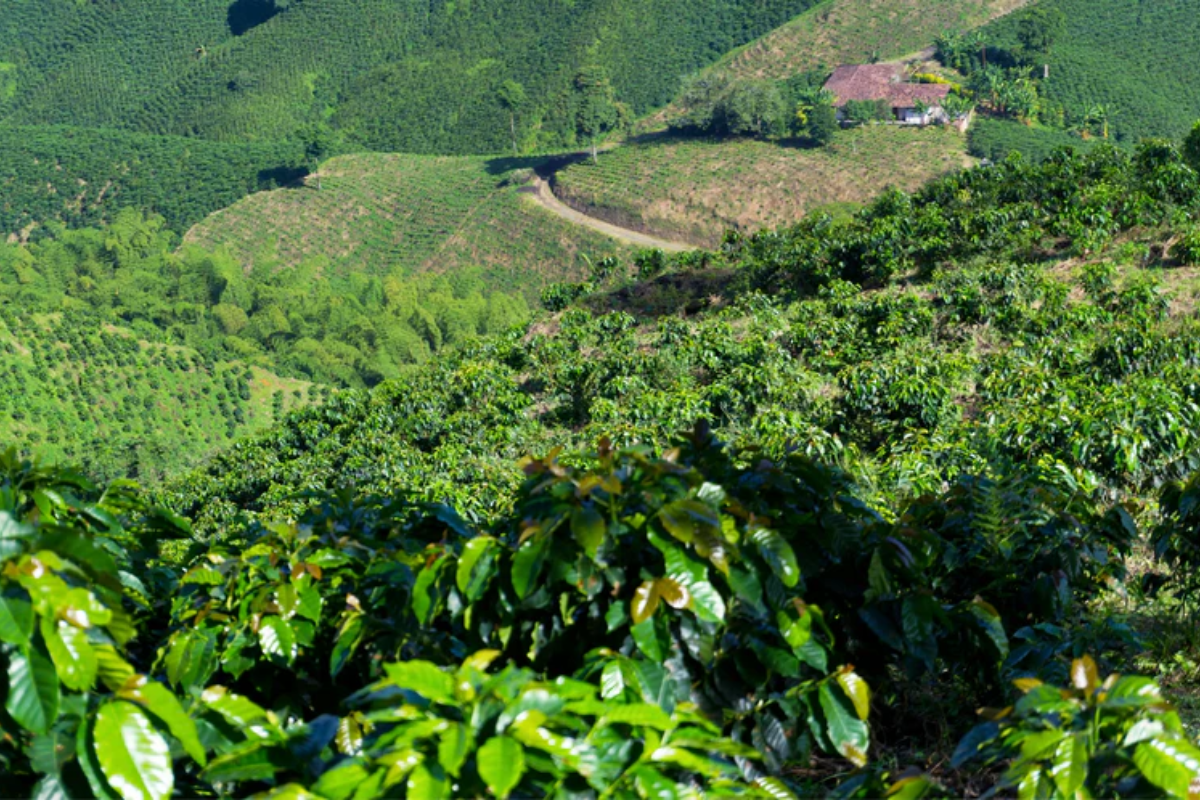
The story begins at coffee farms, where sustainability is already part of daily agricultural life.
Retired Coffee Trees as a Valuable Resource
Coffee trees typically produce beans for around 20 to 30 years. After this period, productivity declines and farmers must replace old trees to maintain crop quality. This is a normal and unavoidable process in coffee farming.
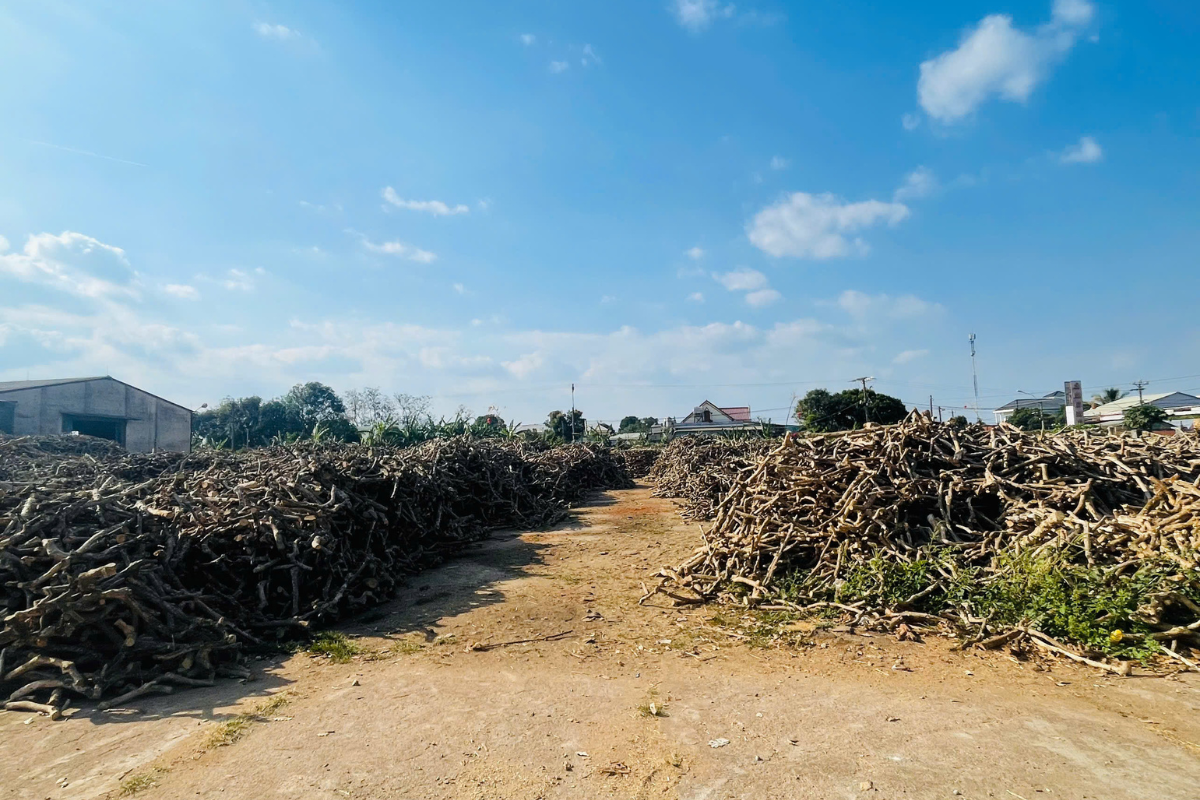
Traditionally, retired coffee trees are burned or discarded. While this clears land for new planting, it also creates unnecessary waste and environmental impact.
コーヒーウッド dog chews give these old trees a second life.
Turning Agricultural Waste into Natural Dog Chews
Producers collect retired coffee trees and repurpose them into durable, natural dog chews instead of treating them as waste. Farmers already have this wood within the agricultural cycle, so production requires no additional raw materials.
This process transforms agricultural by-products into high-value pet products. It reduces waste at the farm level while supplying the pet industry with a sustainable, reliable raw material.
No Deforestation, No New Trees Cut
Buyers often ask whether manufacturers cut trees specifically to produce dog chews.
With coffee wood dog chews, the answer is clear: manufacturers do not cut any new trees.
Producers source the wood exclusively from coffee trees that farmers remove during routine farm renewal. This practice protects forests and preserves natural ecosystems.
As a result, coffee wood dog chews meet the expectations of markets with strict environmental and sustainability standards.
Minimal Processing for Lower Environmental Impact
Sustainability is not only about sourcing but also about production.
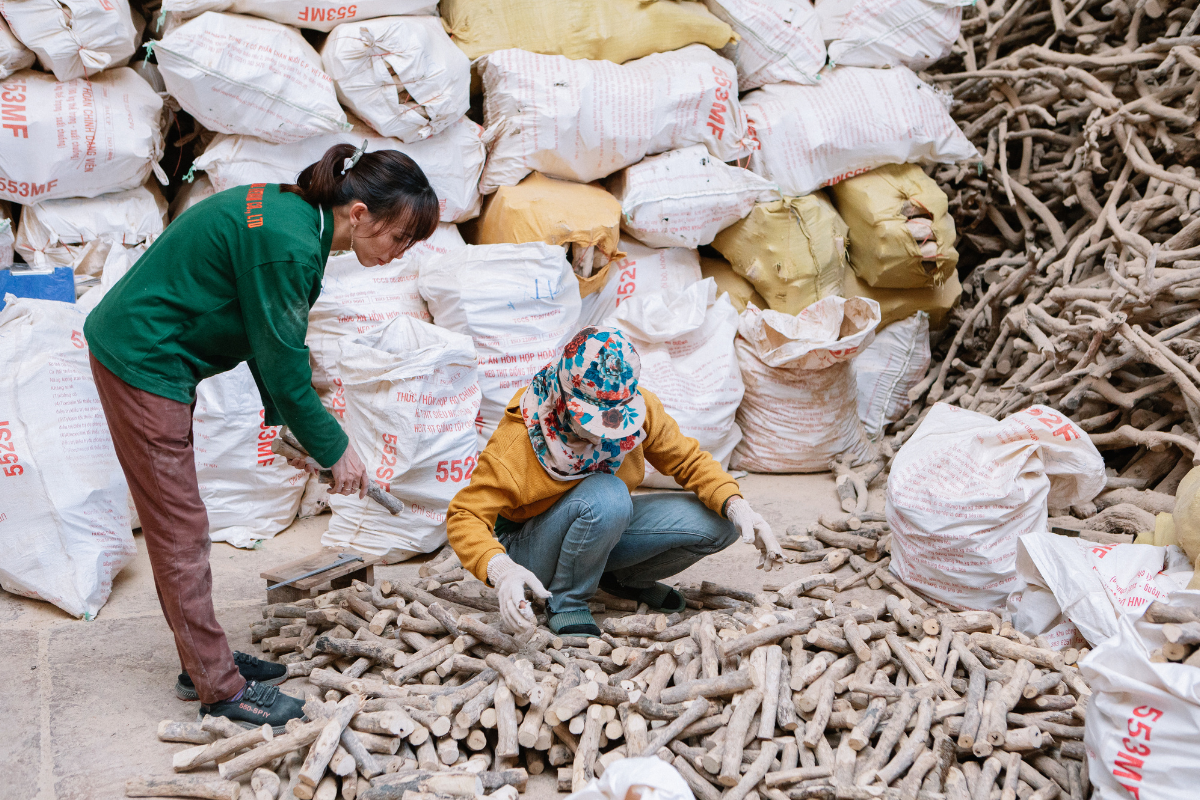
Coffee wood dog chews are made using minimal processing. The wood is cleaned, naturally dried, shaped, and smoothed without chemicals, artificial flavors, or synthetic additives. This keeps the product close to its natural state and helps reduce energy use and environmental impact.
Fewer processing steps mean fewer emissions and less industrial waste.
Durability That Reduces Waste Over Time
Another important aspect of circular economy thinking is product lifespan.
Coffee wood is dense and naturally hard, allowing dogs to chew for long periods. A longer-lasting dog chew means fewer replacements, less packaging waste, and reduced transportation impact over time.
Durability is not only a functional benefit for dogs but also a sustainability advantage.
Supporting Transparent and Responsible Supply Chains
Coffee wood dog chews create value across the supply chain. Farmers reduce waste from old plantations, manufacturers gain a renewable raw material, and buyers receive a product that aligns with modern sustainability expectations.
This transparency helps build trust with distributors, retailers, and end consumers—especially in markets where environmental responsibility is a key purchasing factor.
Coffee Wood Dog Chews as a Practical Circular Economy Solution
Coffee wood dog chews show that sustainability does not require complex systems or high-tech solutions. Sometimes, it simply requires a smarter way of using what already exists.
By repurposing retired coffee trees, the pet industry can reduce waste, lower environmental impact, and still deliver safe, durable products that dogs love.
In a circular economy, nothing is wasted—and coffee wood dog chews are a clear example of that principle in action.
 Contact TH Global Vietnam today to explore wholesale options.
 TH GLOBAL VIETNAM CO。、LTD
 Hotline: +84 382 803 290
 Email: [email protected]
 JA
JA  EN
EN  FR
FR  ES
ES  KO
KO